- Cambio de Juego (In English)
- Posts
- Re-building Necaxa
Re-building Necaxa
Analyzing the impact of hiring Martín Varini, their squad, and possible signings

Tom Harrison
December 23, 2025
Photo from Mediotiempo
I’m pleased to announce that I’m now part of the “Twelve Creator Collective”, all graphics in this article come from their “Earpiece” product.

Summary:
Bringing in Martín Varini seems like a drastic stylistic change. Varini out-performed expectations at Juárez, but Necaxa may lose their recent identity and ability to sell attacking players for large profit.
A center-back with more ability on the ball, and in the air, is a priority this winter.
Necaxa will also have to replace Palavecino if he leaves, with a midfielder who’s capable of advancing and helping to create opportunities.
It’s important to strengthen both wings in the upcoming windows, and Necaxa must take advantage of any opportunity.
Once again, Necaxa will start the season with a new head coach- and it looks like a significant change.
Under Nicolás Larcamón and Fernando Gago, Los Rayos have been strong in attack, but weak in defense. During both of the previous seasons, Necaxa have ranked above league average in attack (in xG), but below average in defense. Out-performing xG resulted in qualification for liguilla under Larcamón, but overall performance levels haven’t changed too much in the past couple of years.
Now, Los Rayos appear to be looking to find solutions for defensive weaknesses, by bringing in Martín Varini. The Argentine coach created an organized, flexible and effective out of possession approach with FC Juárez. But will Necaxa lose their attacking strength and identity from recent seasons?
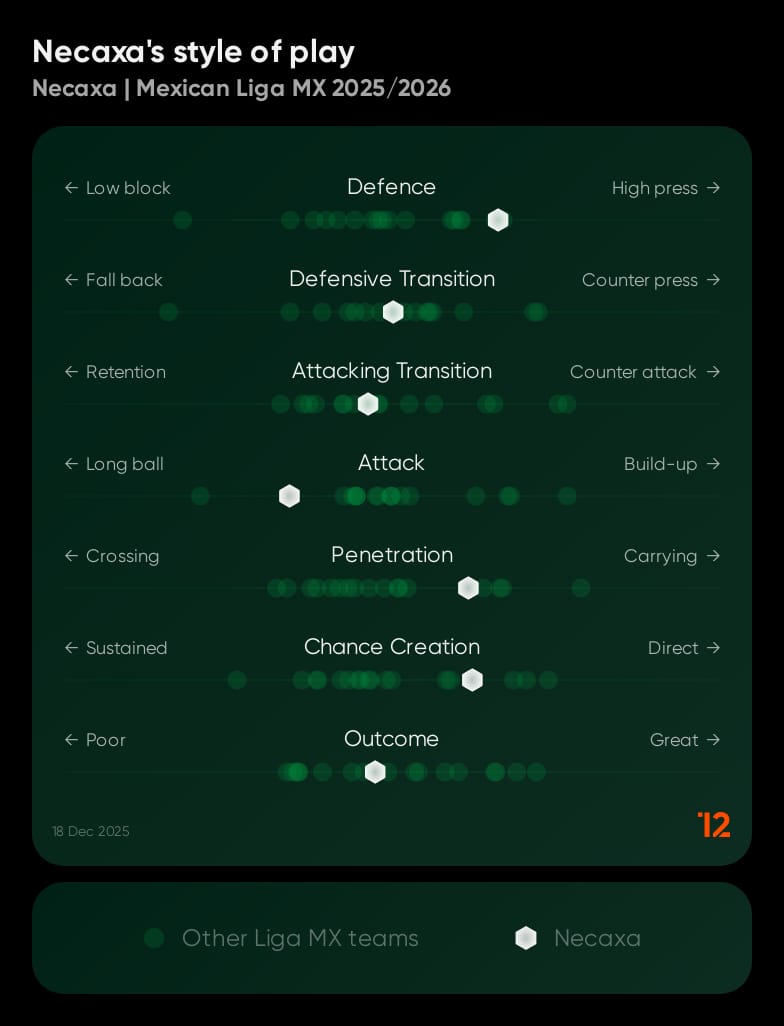
Whilst Necaxa’s matches have often been exciting, open encounters, with 3.6 goals per game in 2025, Juárez’s matches have only average 2.7 goals per game under Varini.
Necaxa created chaotic matches under Larcamón and Gago; with more verticality, more intense pressing, and many shooting opportunities for and against.
Necaxa play style analysis from Twelve. The white points show their ranking versus other teams in Liga MX (in green). The concepts analyzed combine a variety of weighted metrics.
Varini prioritized order with Juárez; little verticality and more short goal kicks, retention rather than creation in attacking transition, and few chances for both teams.
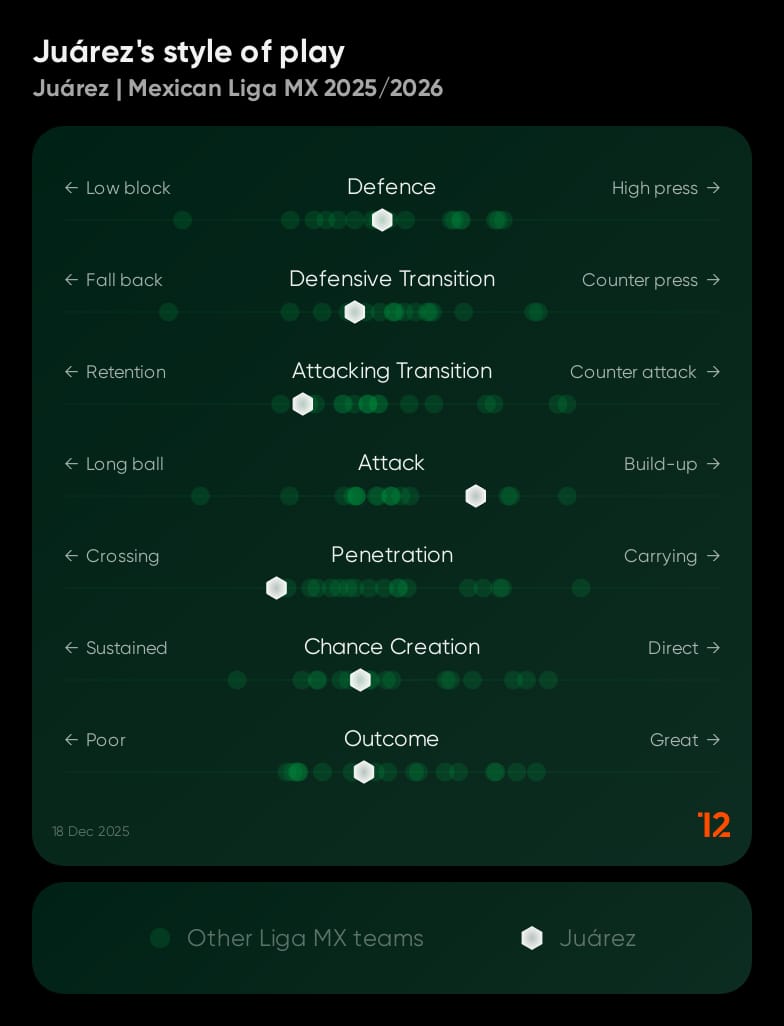
Juárez’s defensive adjustments were their main strength under Varini, displaying an ability to change their pressing structures depending on the opponent, and frequently creating a dynamic back-five to prevent numerical superiority.
I analyzed their defensive tactics in this article:

Varini has also used a different system to Necaxa in recent seasons, although there are some concepts in common. Necaxa have used a back-three, and whilst Varini starts with a back-four, his left-back often creates a back-three in build-up. Also, Juárez’s left-winger had an important defensive role, dropping back to defend the whole flank.
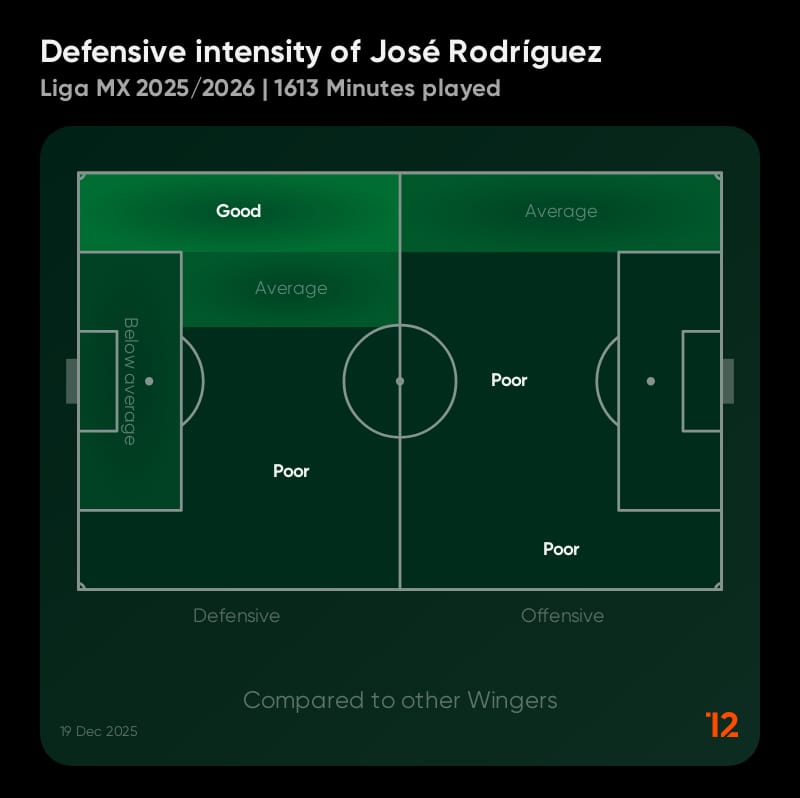
José Luis Rodríguez, often Juárez’s left-winger, shows above-average defensive intensity in his defensive half, without standing-out in the opposing half.
There’s evidence that Varini can out-perform expectations at a side without a huge budget, and he still has plenty of time to learn and develop as a coach. However, it’s a drastic stylistic change and Necaxa will have to invest to build a squad that fits in with Varini’s ideas. Also, his cautious football won’t be effective if Necaxa want to continue their model of player trading and selling high. Attackers tend to sell for more, their prices increase with more goals/assist, and a more defensive style limits a player’s goals and assists.
Goalkeeper | Unsaín will have to adapt
Ezequiel Unsaín has attempted more long passes than Liga MX average at Necaxa. Varini gets his sides playing out from the back more often.
Unsaín did play fewer direct passes whilst in Argentina, and therefore it’s possible that he could adapt under Varini.
Necaxa will also hope that Unsaín will rediscover his historic shot-stopping ability. Consistently one of the most effective shot-stoppers in Argentina, Unsaín’s performances have dropped-off season-by-season in México.
If Unsaín doesn’t recover his in-possession style and shot-stopping ability, Necaxa will have to look for a new keeper.
Center-backs | A more complete center-back is required
Juárez’s defensive success wasn’t just a result of Varini’s tactical approach. He also had physically dominante center-backs, who could win aerial duels and cover space when their pressing forced long balls.
Moises Castillo was Juárez’s key man at the back, combining dominance in defensive duels with speed and quality in deep build-up. Necaxa have a variety of options in defense, but none are as complete as Castillo.
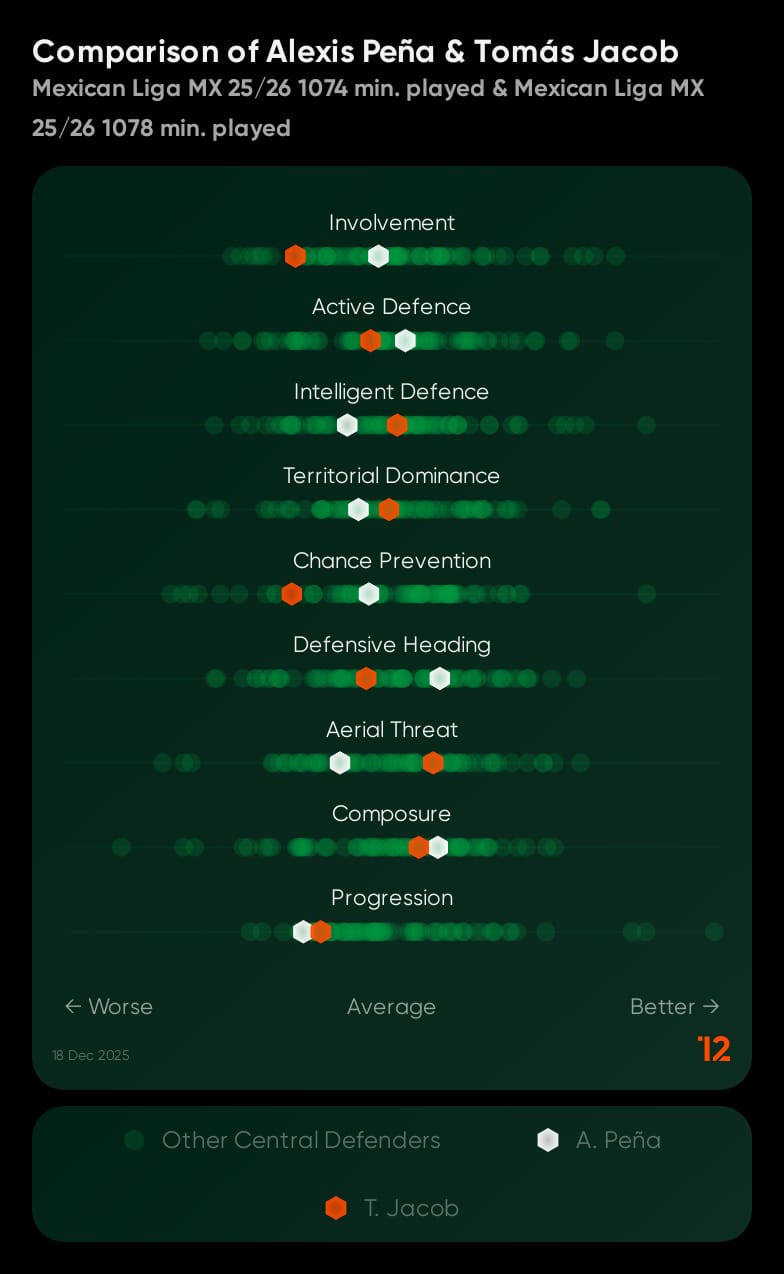
Analysis of Alexis Peña (white) and Tomás Jacob (red) during 2025-26, compared with other Liga MX center-backs. The concepts analyzed combine a variety of weighted metrics.
Agustín Oliveros (white) and new signing Raúl Martínez (red, during 2024-25) versus other Liga MX center-backs.
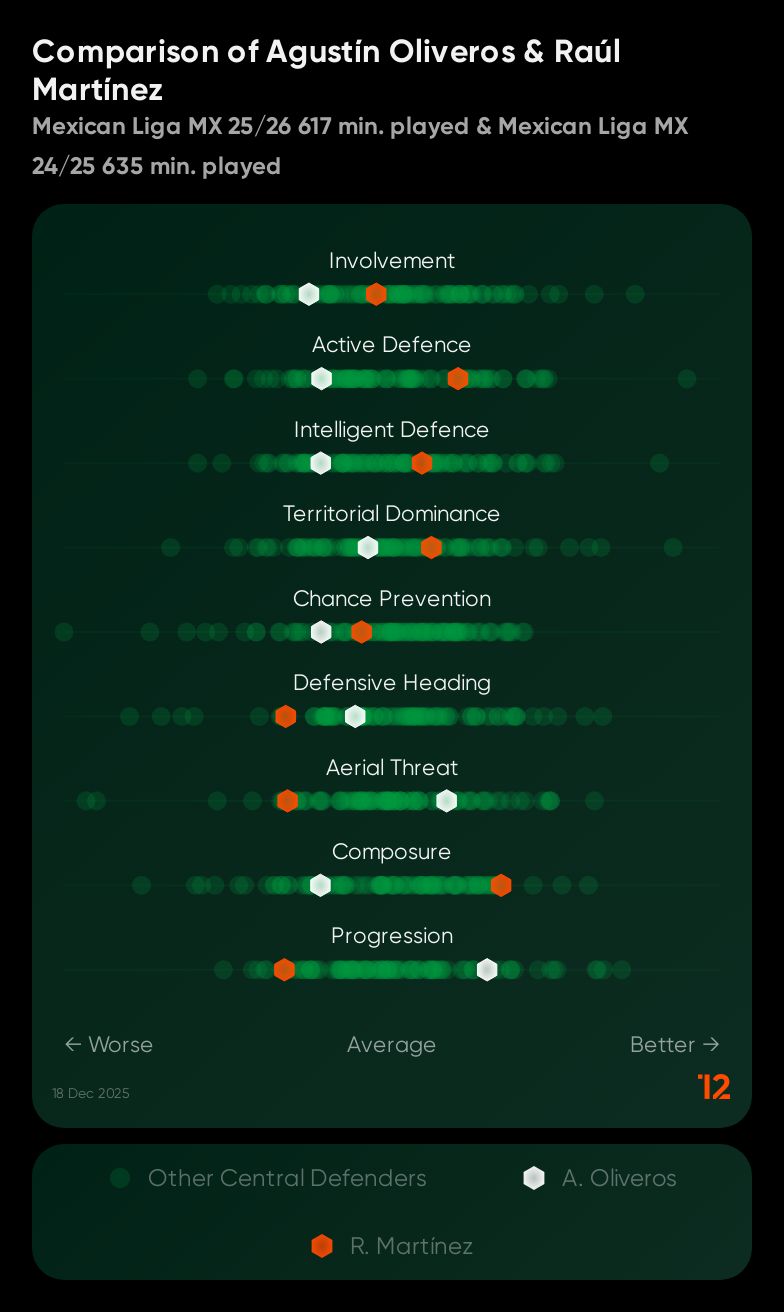
Los Rayos clearly lack an aerially strong center-back. Agustín Oliveros is more effective on the ball, but considering his defensive weaknesses, can only play on the left of a back-four. Tomás Jacob struggles in-possession, despite playing some minutes in midfield. Raúl Martínez, who’s joined from Chivas, doesn’t appear a great addition. Another center-back is a priority.
The investment
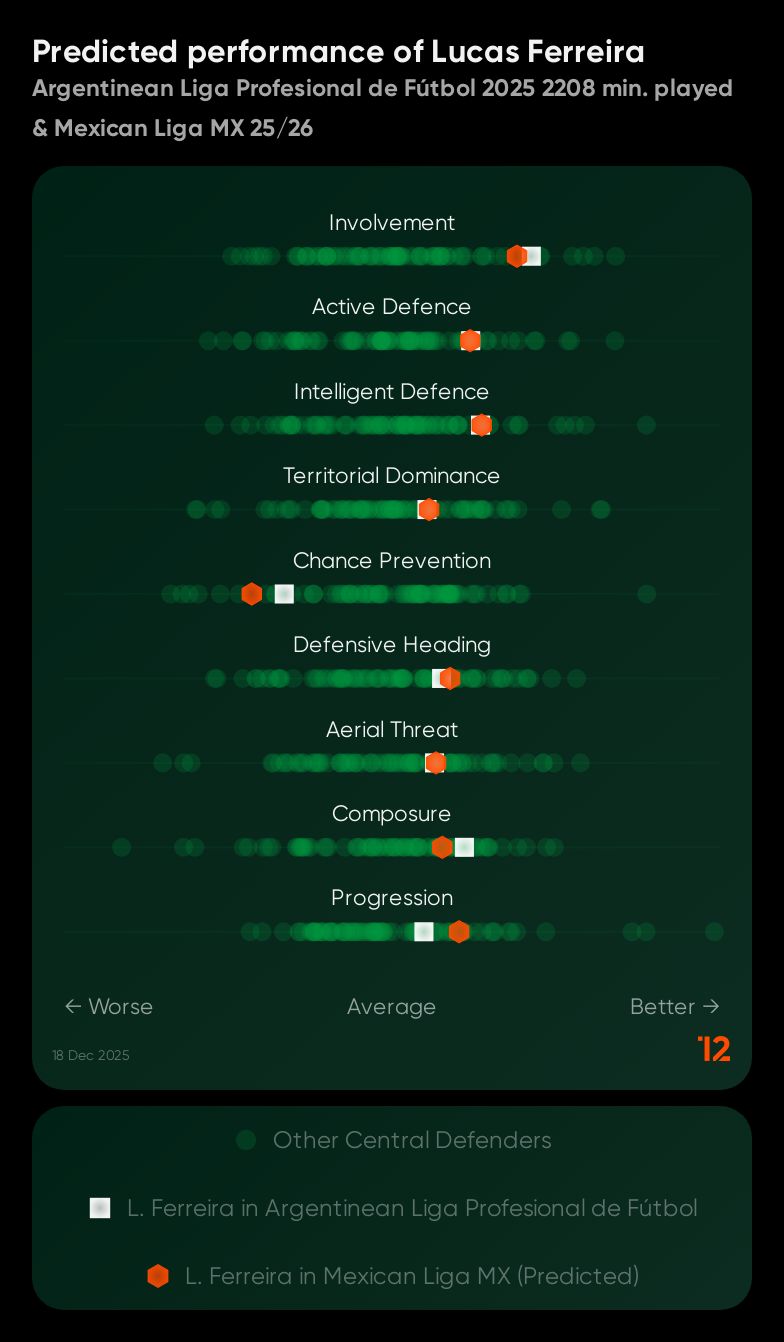
Lucas Ferreira has played at a high level in Uruguay and Argentina, whilst showing excellent availability. The Uruguayan totals more than 8,000 minutes played in the past three years, with over 3,000 league minutes during his year and a half with Defensa y Justicia. Comfortable on the right of a back-four or three, Ferreira stands-out for his anticipation and reading of the game, and is also capable in the air, and in-possession.
The price could be an issue, although Necaxa did pay $2.8m for Jacob in the summer, a significantly worse player. Ferreira should be a guaranteed started, and at 25-years-old, Necaxa would still have time to recover the investment.
Lucas Ferreira concept analysis, from Twelve. Using their model to predict adaptation between different leagues, which considers historic examples, we can see a prediction of his performance level in Liga MX. The Argentinean Liga Profesional is of a similar level to Liga MX, so similar performances would be expected.
The pick for Varini
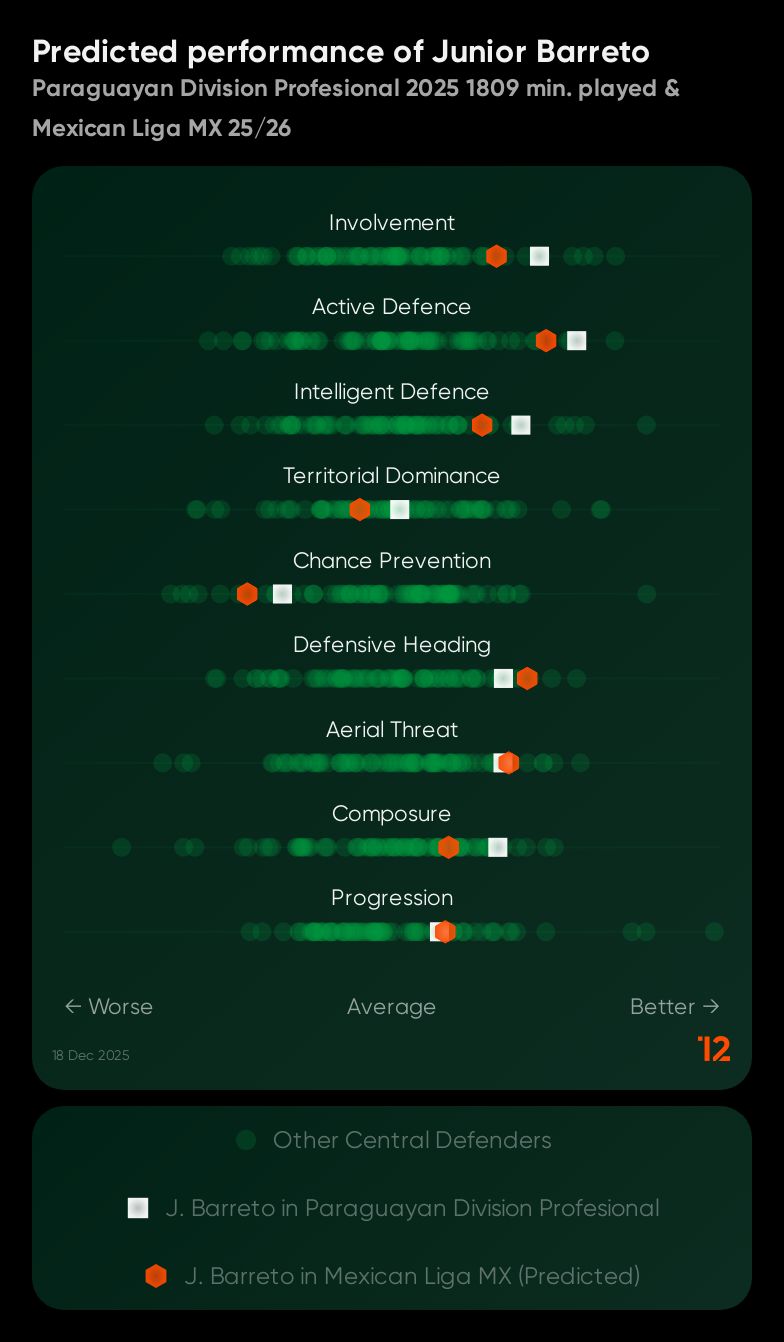
Given that Varini’s style requires center-backs with a strong aerial game and quality in build-up, Junior Barreto seems like a great option. Barreto is 27, but is a relatively late developer, becoming a starter for Olimpia in the past two years. However, his performances in 2025 suggests he could make a step-up to a stronger league, and that he could work for Varini. Also, Barreto only has one more year on his contract.
The tall option
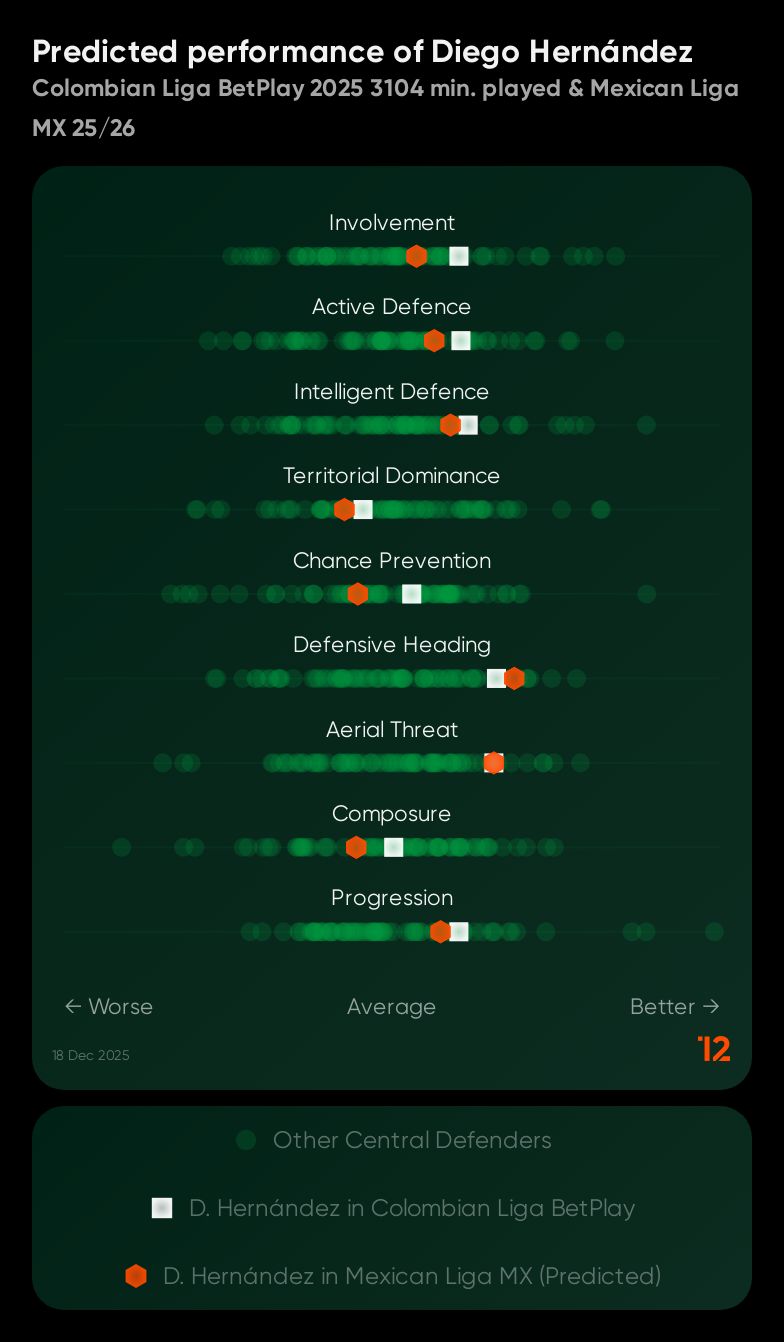
Diego Hernández, 25, is 190cm tall, has years of experience in Colombia, and a good age profile. Like Ferreira, Hernández plays on the right, either in a back-four or three. The Águilas Doradas center-back also shows high aggression to jump and press opponents, and can dominate defensive duels.
The left-footed option
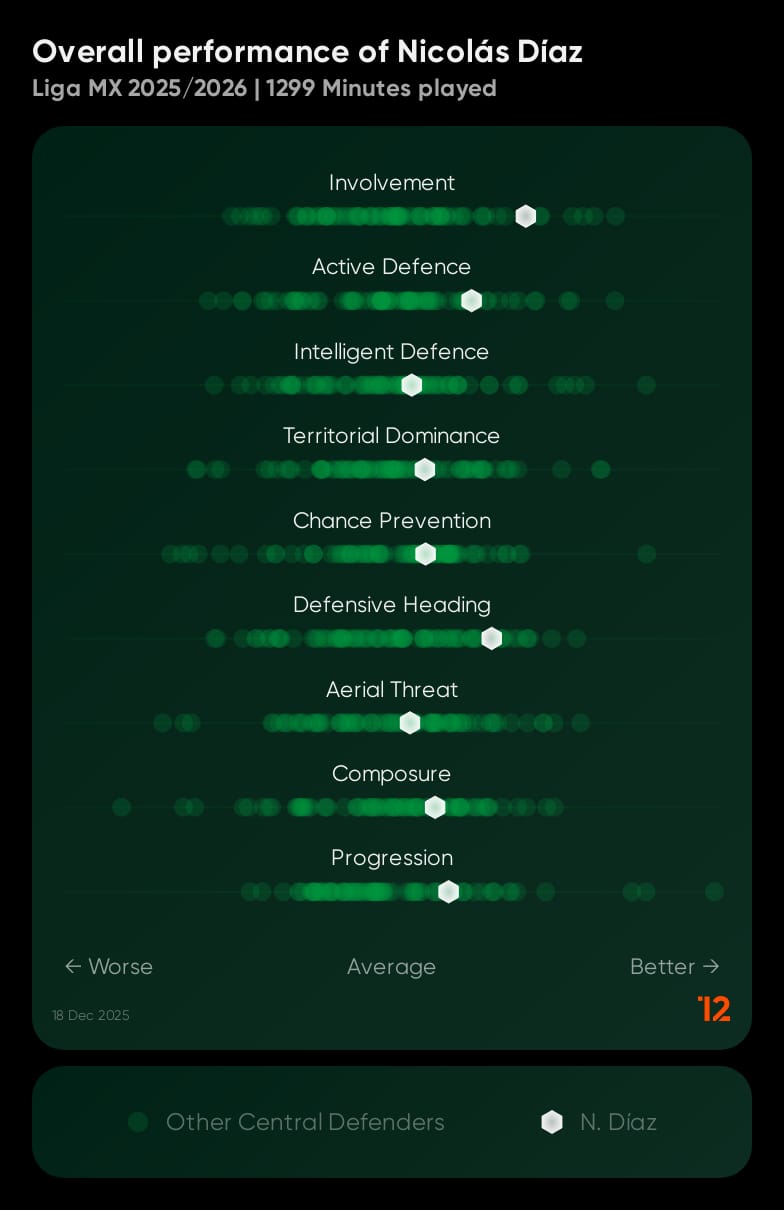
Nicolás Díaz’s loan at Puebla ends in December, and the 26-year-old Chilean has a great profile for Varini. With years of Liga MX experience, Díaz is aggressive out of possession, comfortable defending in a higher line and effective at progressive the ball out from the back. He isn’t that tall, but Díaz still stands-out in defensive aerial duels.
Full-backs | Will Varini look for a new Denzell García?
At Juárez, the Argentinean coach used his full-backs in very specific, and distinct, roles. His left-back (predominantly Ralph Orquín or Alejandro Mayorga) played in more defensive roles, as times creating a back-three in build-up and defending closer to the center-backs.
Necaxa have two solid options to play in this role. “Chicote” Calderón was often used in a similar role under André Jardine at América, whilst Agustín Oliveros has played at left-back and center-back. Franco Rossano is the other left-back option, and has shown potential, but is more of an attacking, overlapping full-back.
On the right, Varini converted Denzell García from a holding midfielder to a right-back, although he still occupied a midfield position when Juárez had the ball.
Varini could try to replicate his success with García by converting a young Necaxa midfielder, or use Tomás Jacob in this role (he has minutes at center-back, right-back and holding midfielder throughout his career). However, all of these options look very limited on the ball.
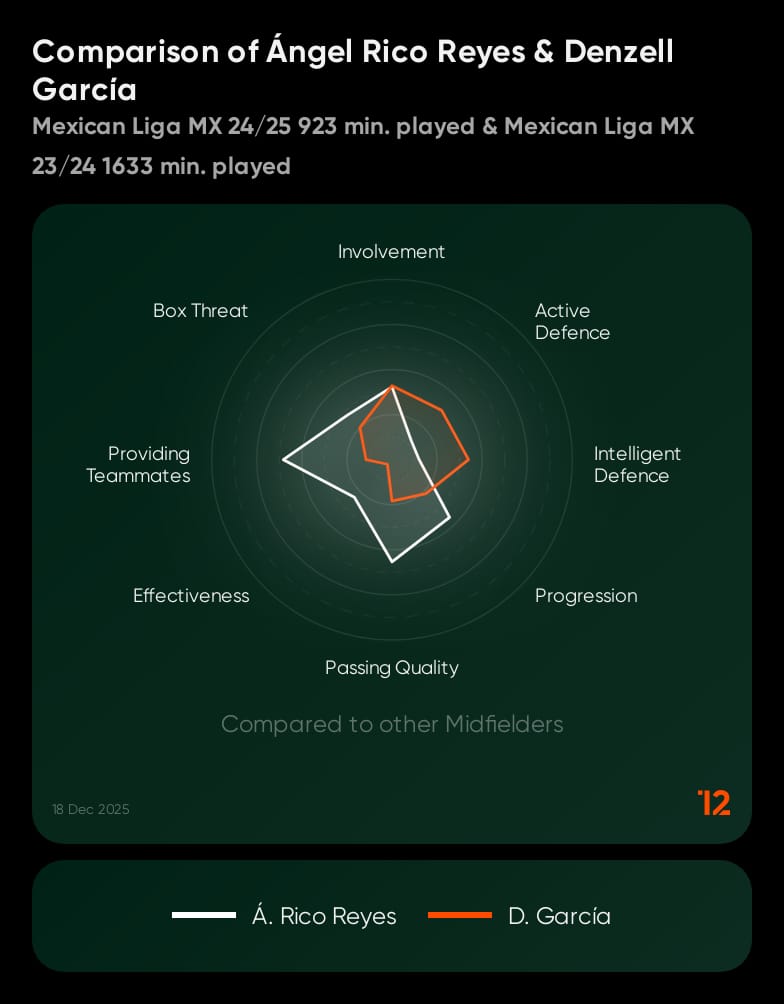
If Los Rayos want to invest in a possible “new Denzell”, Pumas’ Ángel Rico, 20, who’s played little under Efraín Juárez, could be interesting, given his similarity to Denzell, before his positional change.
Emilio Lara is Necaxa’s most obvious option to play at right-back. His defensive weaknesses have been exploited whilst playing on the right of a back-three, but Lara did show potential as a more “traditional”, up and down full-back. His energy to help win the ball back and create in the final third stood-out in his first season at América.
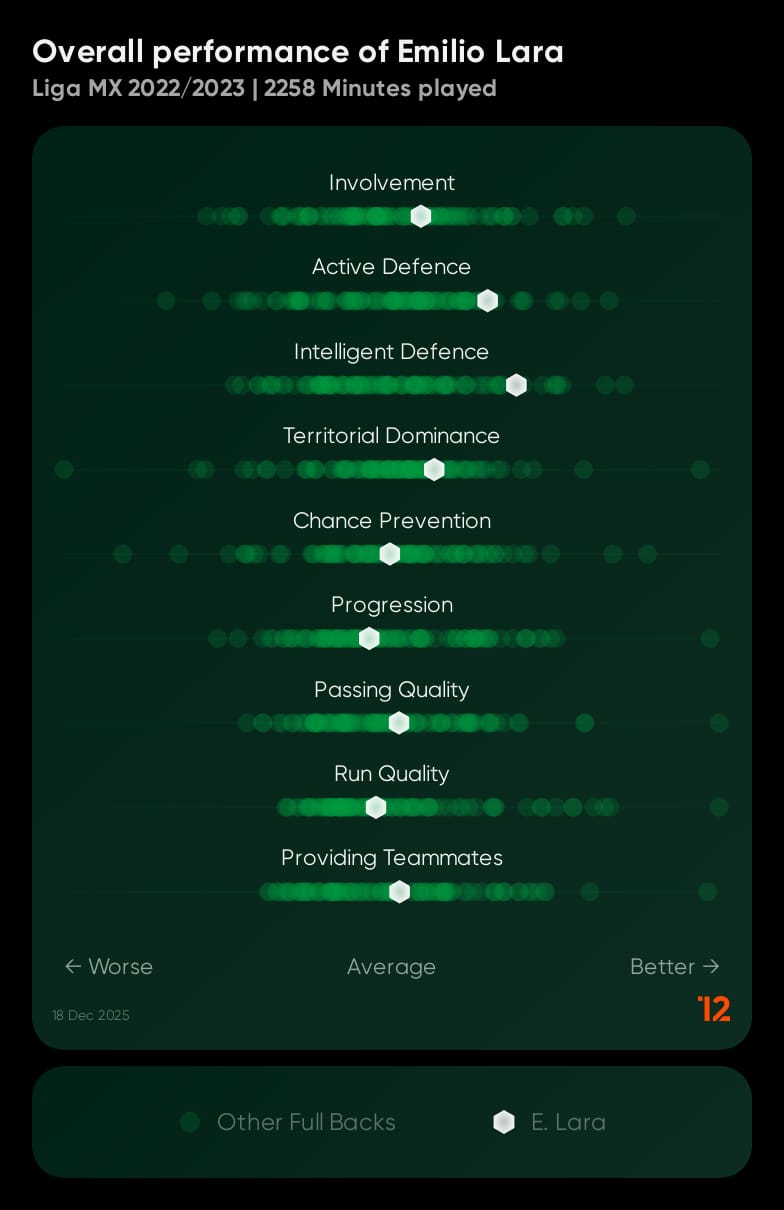
However, he doesn’t seem to have the on-ball talent to play an inverted role, like Denzell García.
Midfielders | Replacing Palavecino
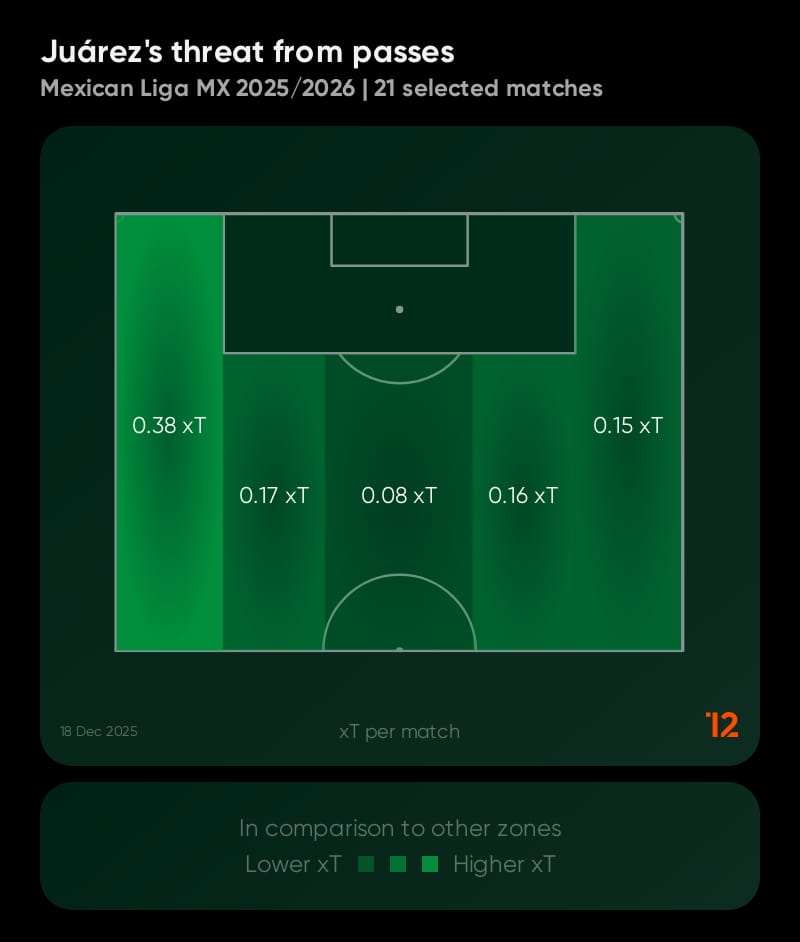
Little ball progression through the center of the pitch was a trend for Varini’s Juárez. This may have been influenced by cautious instructions, limiting the number of attempted passes between the lines to reduce the chance of conceding dangerous turnovers. But there were also individual factors.
Juárez creativity per vertical lane during 2025-25, using the xT model (expected threat) which analyses how every on-ball action impacts future goal probability. Juárez lacked creativity from the center of the pitch, and relied on the left-wing.
At Necaxa, Varini will inherit a more complete holding midfielder than his options at Juárez (Diego Campillo and Homer Martínez). José Iván Rodríguez is in his prime, and was excellent in Apertura 25.
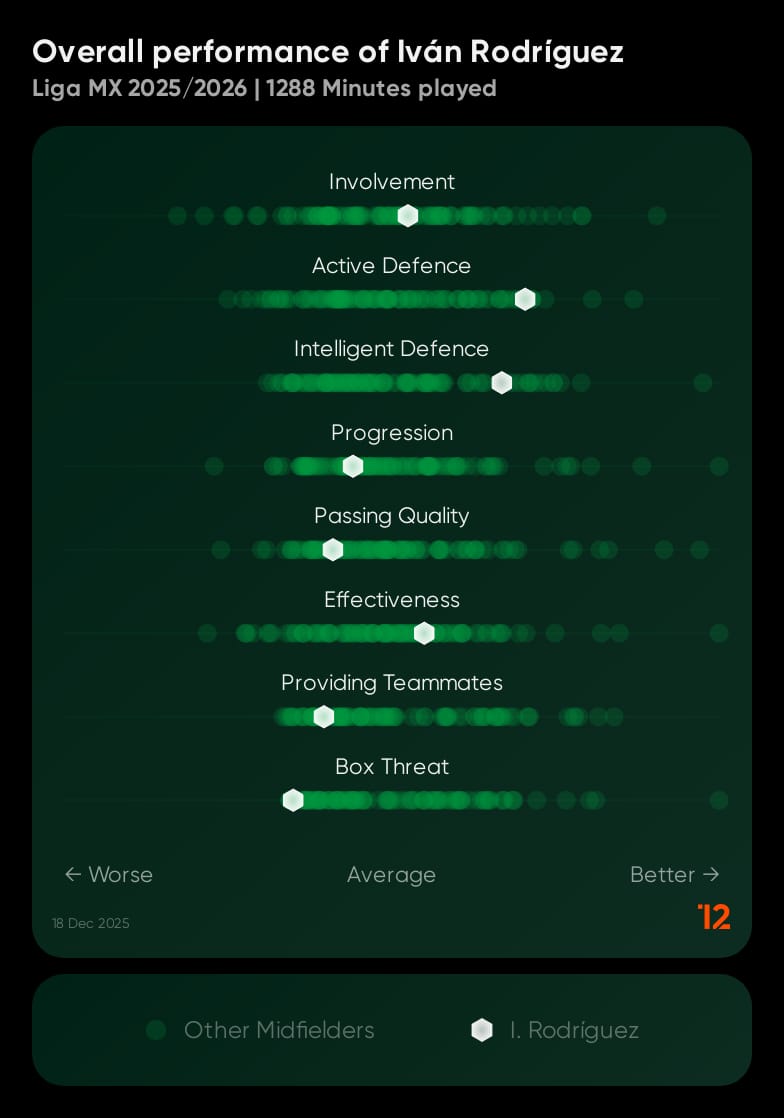
In front of him, Varini has preferred a more adventurous midfielder, who occupy an “interior” midfielder role in-possession, at times playing alongside the number ten. Agustín Palavecino would be perfect for this role, but it seems he’s leaving this winter, so I’ve selected a few possible replacements.
High risk, high reward
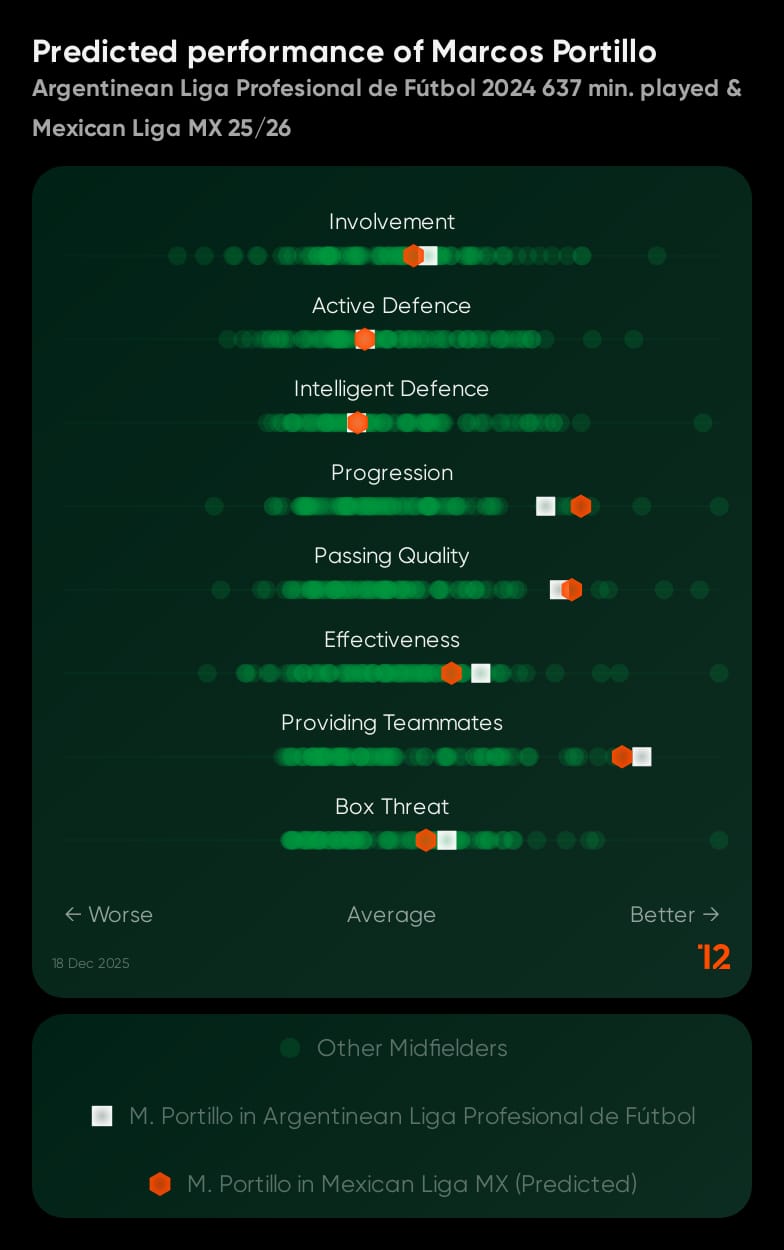
Marcos Portillo, a 25-year-old from Platense, has never beaten the 1,000 minute mark in an Argentine season. But on the pitch, Portillo has shown the quality to make a big impact in a mixed midfielder role. Regularly involved in build-up and direct on the ball, Portillo is also creative in the final third with his dribbles and passes. He does attempt too many long shots, and is a risk given his lack of minutes, although Palavecino also arrived at Necaxa after little playing time in Argentina.
The attacking option
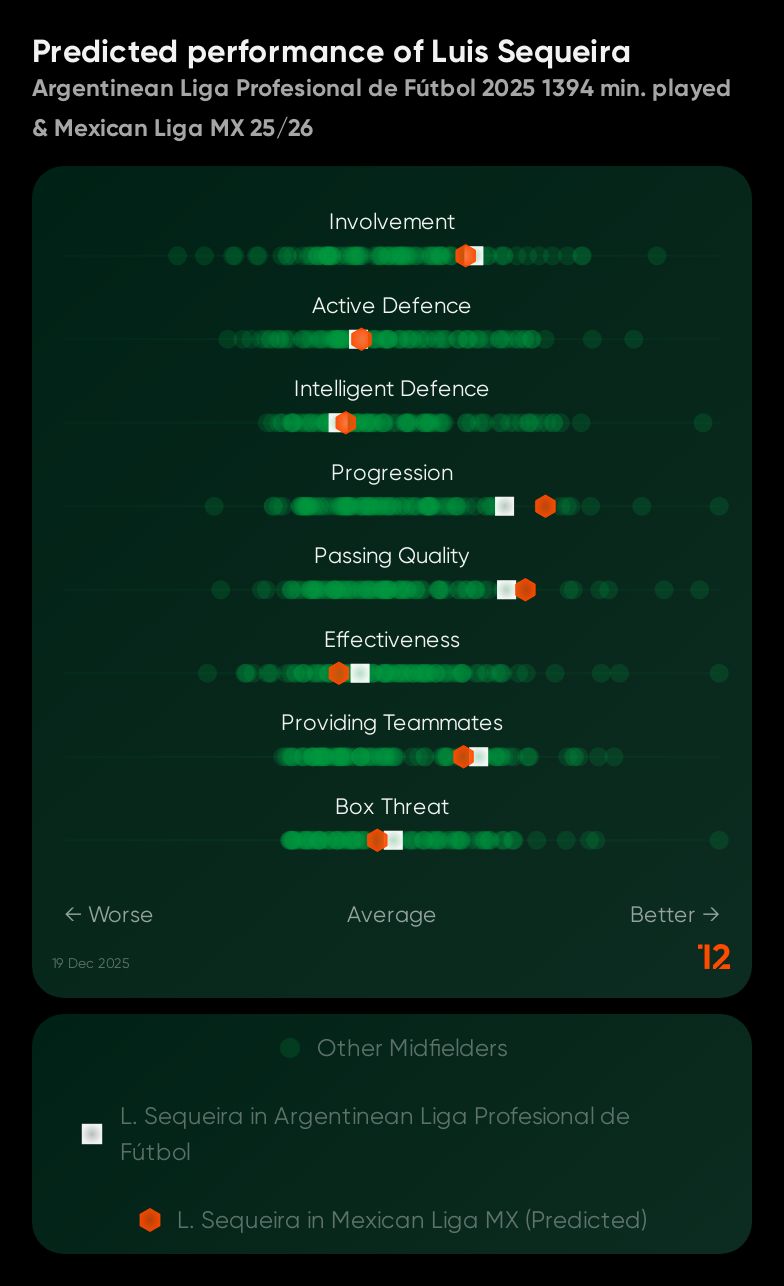
After a successful loan spell with Independiente. Rivadavia, 22-year-old Luis Sequeira returned to Talleres in the summer, but has only been a starter in four matches. Frequently used as a interior midfielder or number 10, Sequeira is excellent at generating ball progression and opportunities. He often drifts out wide in-possession, which could work in Varini’s style, which focuses more on wide attacks. His defensive weakness is a worry, but Varini has been confident in using attacking-midfielders in deeper roles in the past. For example, Rodolfo Pizarro and Jairo Torres.
The defensive option
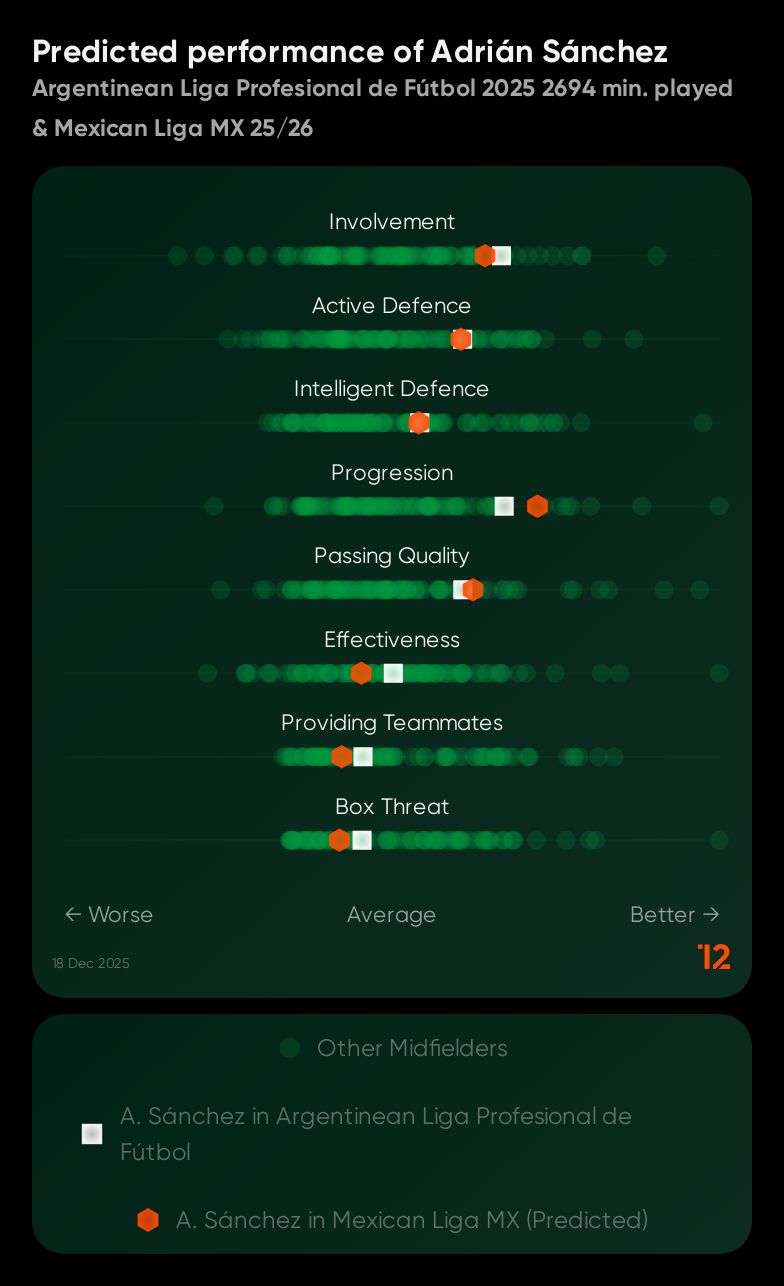
Adrián Sánchez, 26, who can play as a central or right midfielder, is a well-rounded player. A key midfielder for Atlético Tucumán in recent years, Sánchez is efficient at generating ball progression, contributes well out of possession, and dominates aerial duels. The Argentine only has a year left on his contract as well. His tendency to often drop-back to receive more touches in build-up, and lack of final third impact, perhaps isn’t what Varini is looking for, but he seems more likely to be a useful midfielder if Necaxa were to change head coach once again.
The younger option
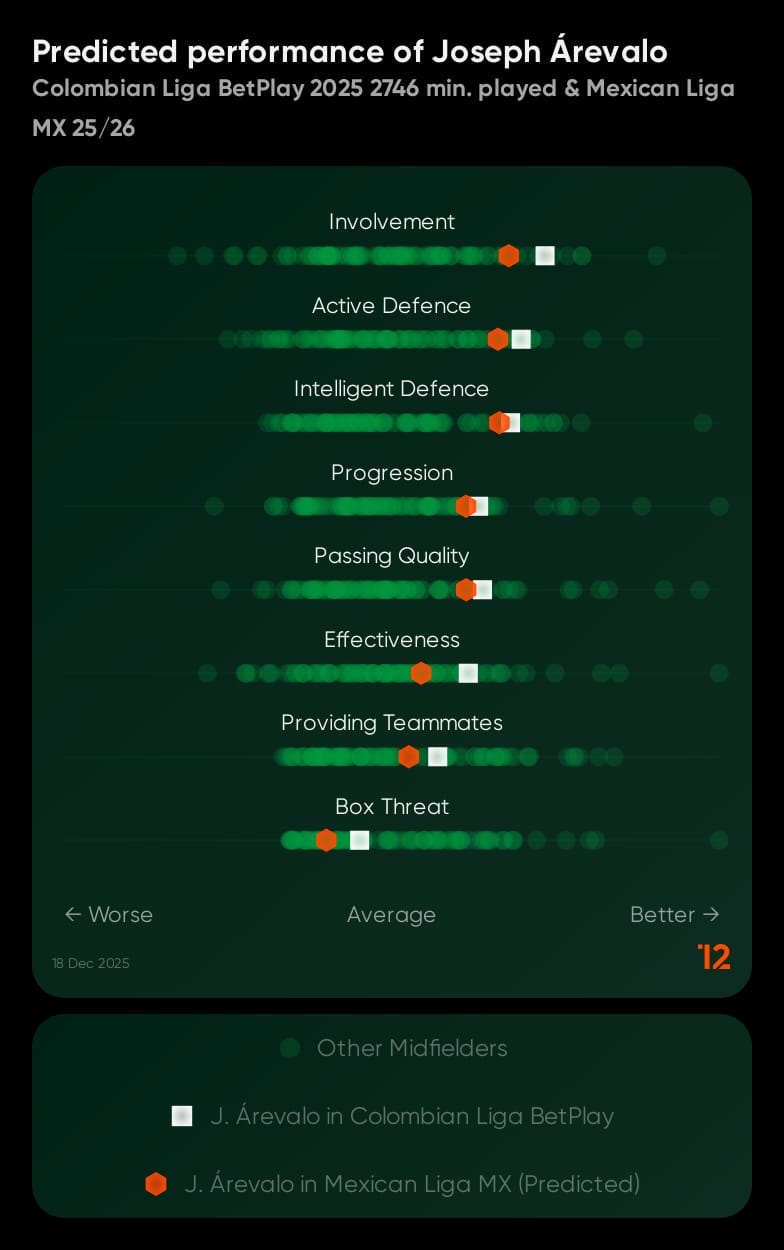
Joseph Nicolás Árevalo’s performances in 2025 suggests that he’s ready to move to a stronger league. The 22-year-old Millonarios midfielder has a similar profile to Palavecino, prioritizing ball progression and chance creation over retaining possession, and high activity out of possession. However, Árevalo must improve his shot decision making and precision.
Attacking-midfield | Pavel Pérez has been excellent at Necaxa
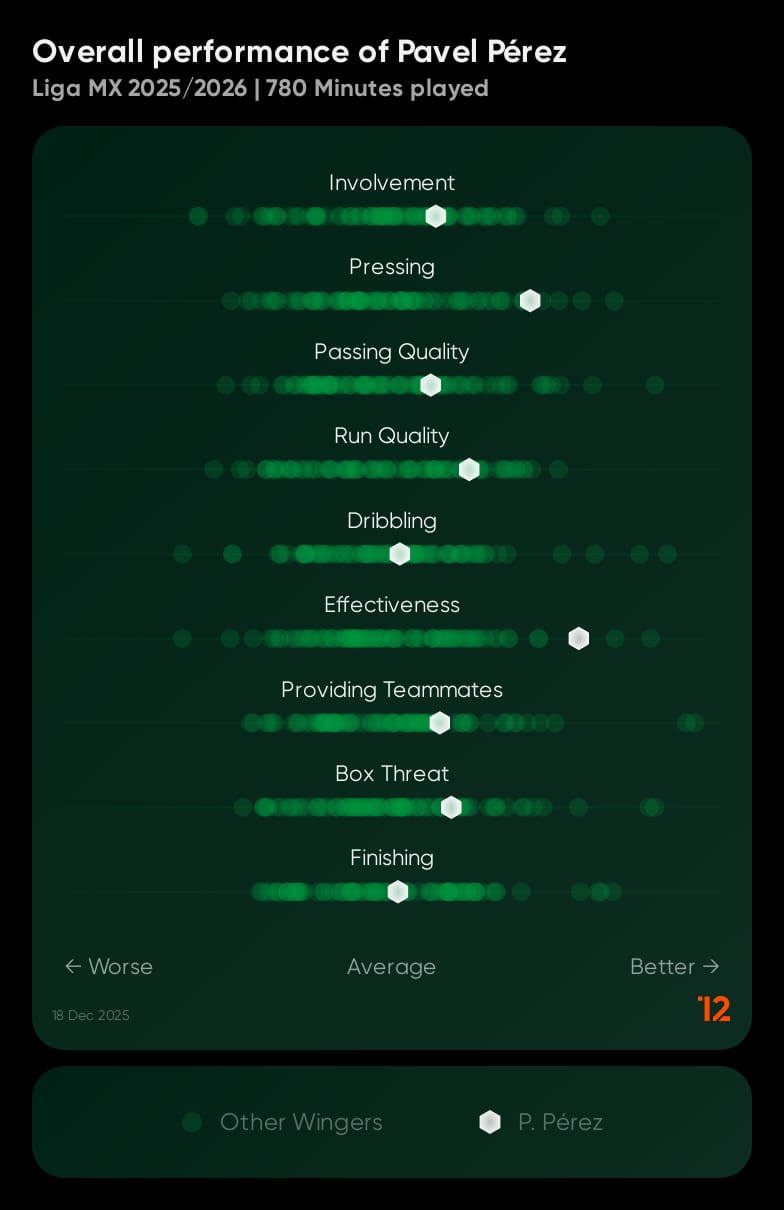
Pérez’s level with Necaxa, after leaving Chivas, has been a surprise. Pérez was always a useful contributor out of possession, but with Los Rayos he’s added goals, key passes and dribbles to his game.
His success has come from a position behind the striker, occupying the left-half-space in a 3-4-3, and it’s likely that his positioning won’t have to change too much under Varini. As the system shifts from a 4-2-3-1 to a 4-3-3, Varini’s number ten, on paper, has often played more like a left interior midfielder when in-possession.
Pérez’s productivity could be impacted by a more cautious and less direct approach though.
Wingers | Necaxa need to strengthen in the next couple of windows
A key position, in and out of possession, for Varini. Defensively, the wingers have important roles in creating a flexible pressing system, whilst the left-winger is often tasked with defending the whole flank and generating a back-five. In attack, given the lack of central ball progression, the ball is often funnelled out to the wings.
In the short-term, Varini can probably use Raúl Sánchez on the left, who has played a few games at wing-back in the past. Rossano is another option for a more defensive winger. However, neither are great in 1vs1 situations.
On the right, Necaxa have Kevin Rosero, a wide player with good defensive work-rate, who’s often played at wing-back in Liga MX. An average of 0.2 xG+A per game isn’t impressive though.
The wide areas aren’t the main priority for Necaxa right now, but they do need to strengthen both positions in the next couple of markets. Therefore, they must take advantage of any opportunity available.
Speaking of opportunities…
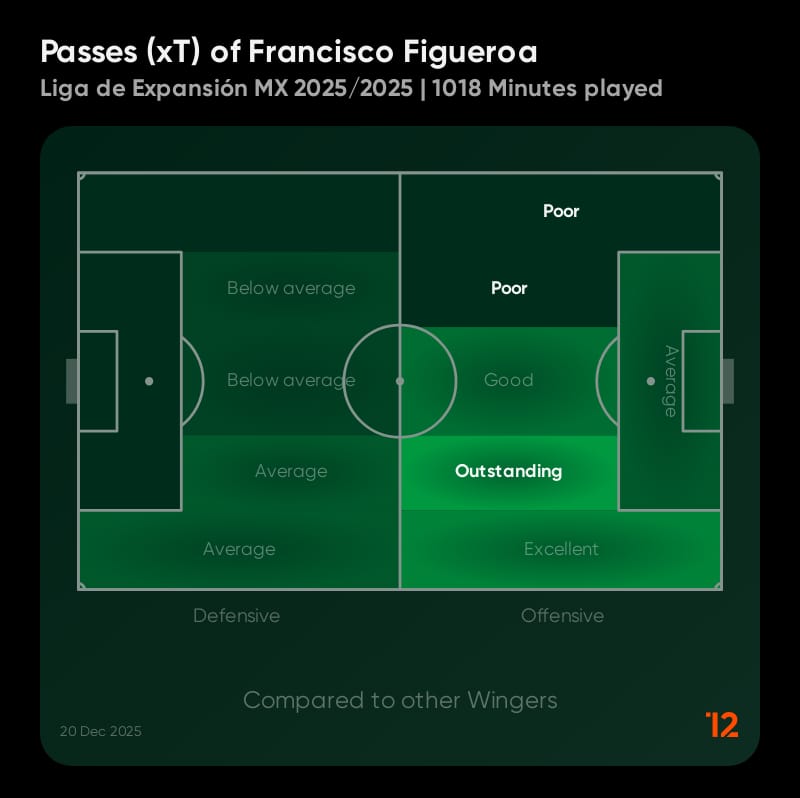
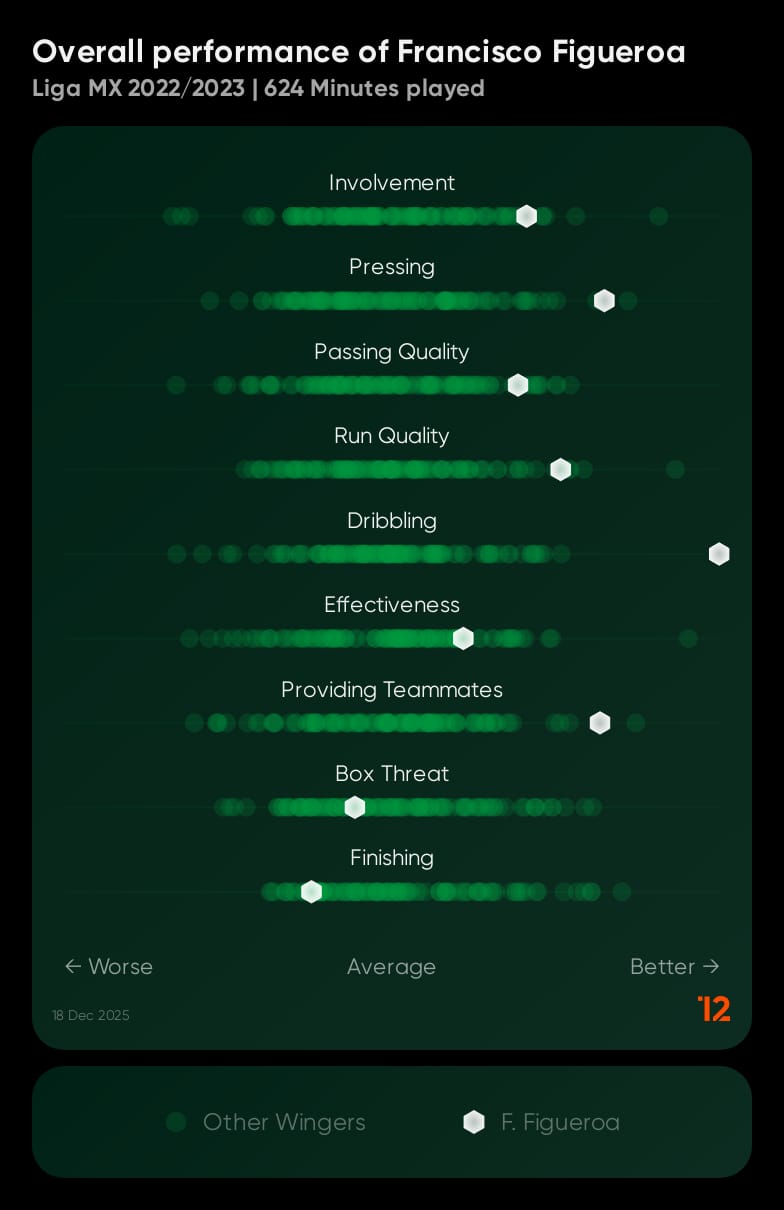
I said it six months ago and I’ll take it again. Someone has to sign “Tony” Figueroa. The Morelia winger is far too talented for the Liga de Expansión, and would add plenty of creativity to any Liga MX attack, from the right wing.
Figueroa is excellent at creating from the right wing and right-half-space, through both passes…
…and dribbles.
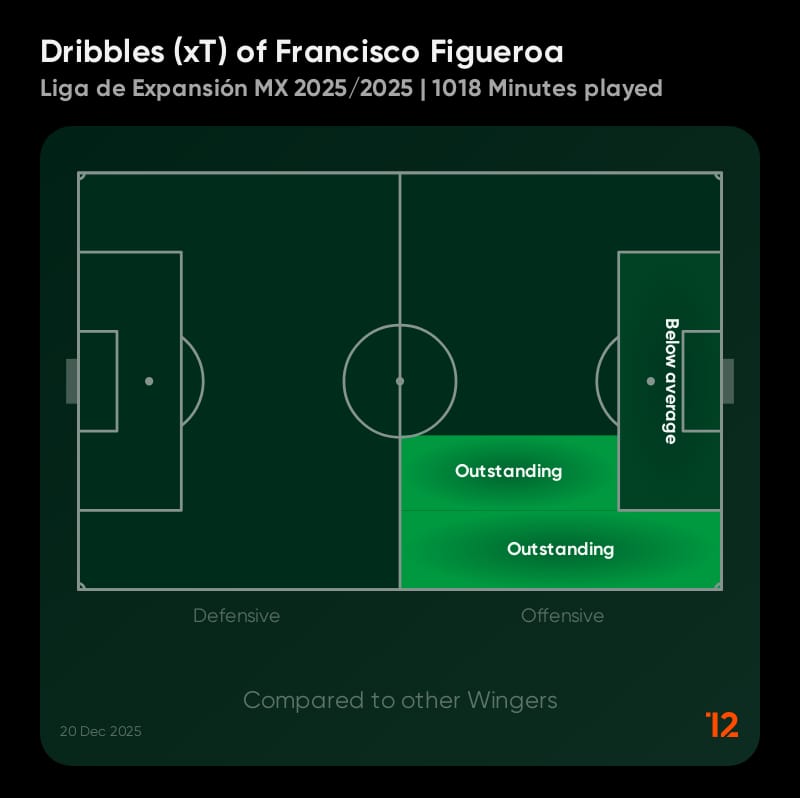
Under Guillermo Almada, Tony, now 26, was one of the best wingers in Liga MX, and worked hard out of possession.
A younger Mexican
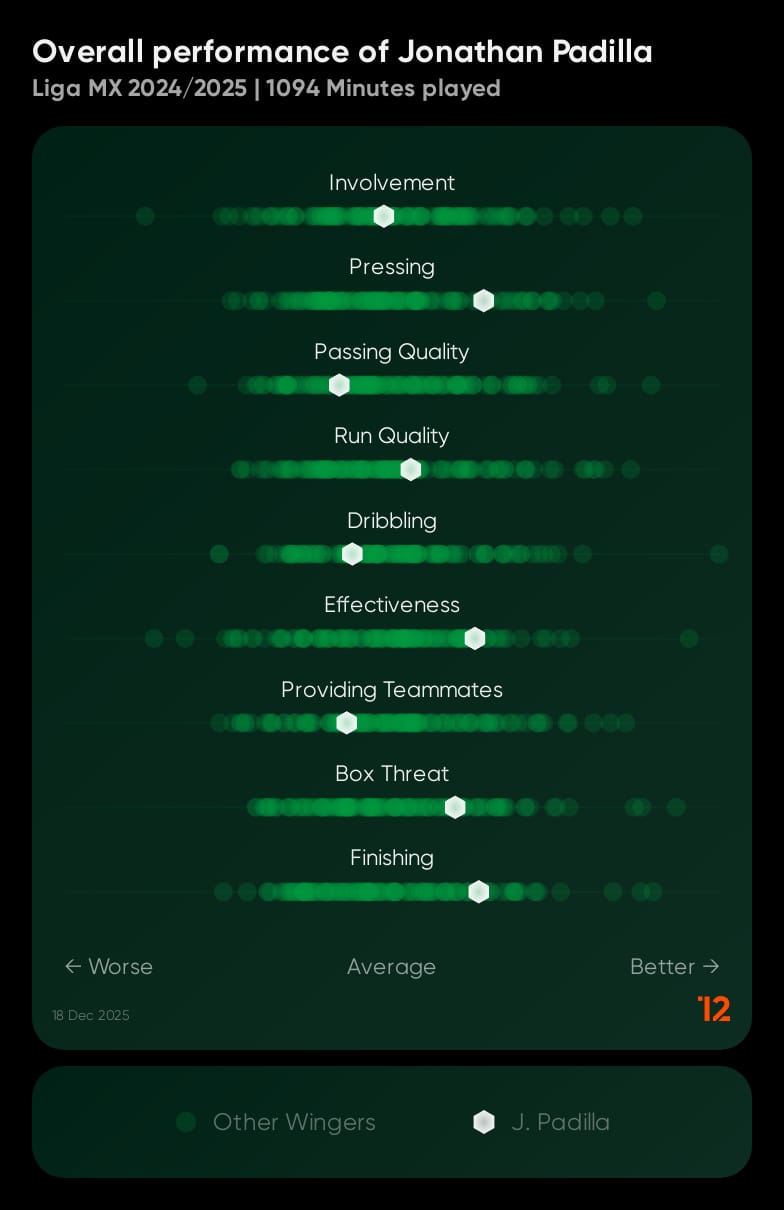
Jonathan Padilla is only 19 and has scored seven times in his Liga MX career. Playing in the U20 World Cup may have impacted his opportunities this season, but it seems that Milito doesn’t have too much faith in Padilla, who only played 35 minutes during Apertura 25. He’s not a particularly creative winger, but stands-out for his defensive work, and has a knack for getting into dangerous shooting positions, and scoring. He needs game time, so a move could work for all parties.
A winger getting few minutes in Europe
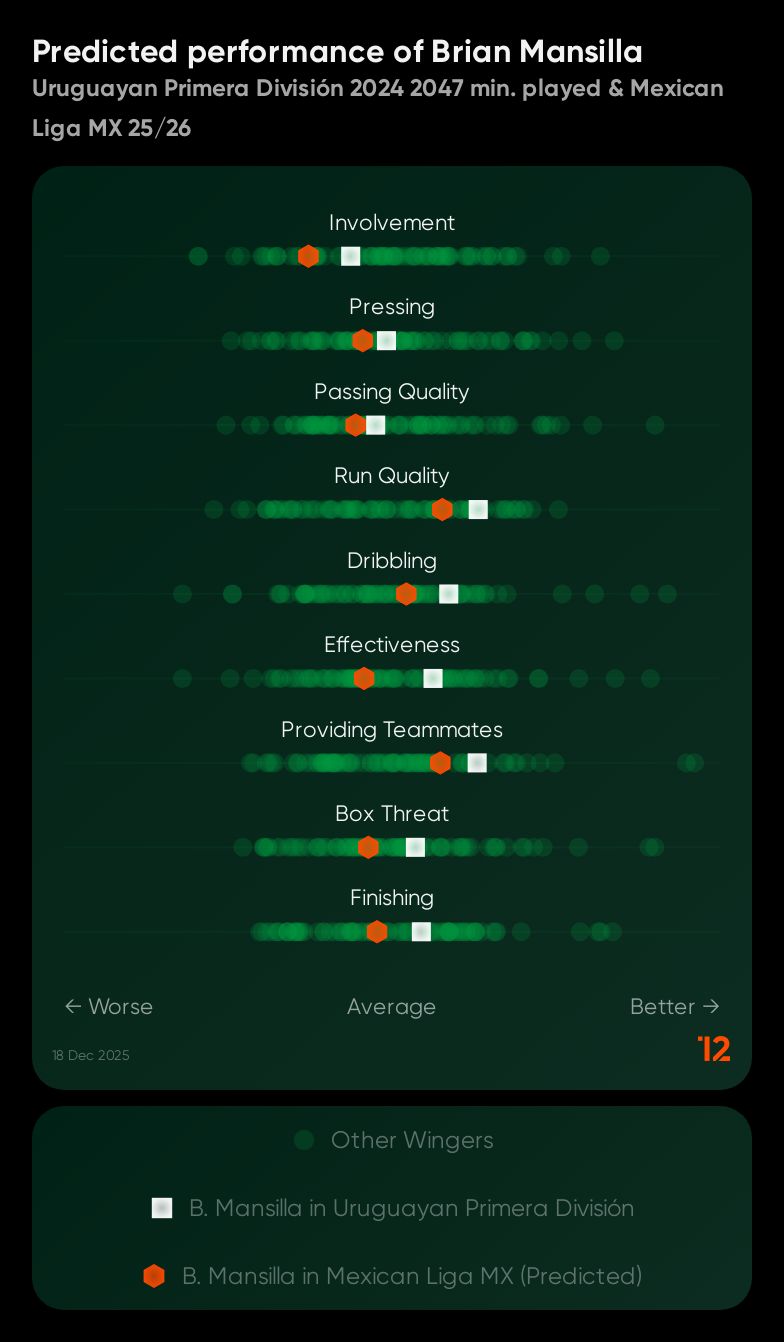
Brian Mansilla, 23, arrived at FC Arouca, in Portugal, after an excellent season with Defensor Sporting in Uruguay. However, Mansilla has played less than 500 minutes in almost a year in Portugal, and may be looking for a move to find more minutes on the pitch. Mansilla has been used on the right in Portugal, but was a left-winger in his native Uruguay. He hasn’t been the most intense out of possession, but Mansilla stands-out in 1vs1 situations and can generate penetration and box entries. However, adapting from Uruguay to Liga MX has been challenging for wingers in the past.
A possible loan before the World Cup
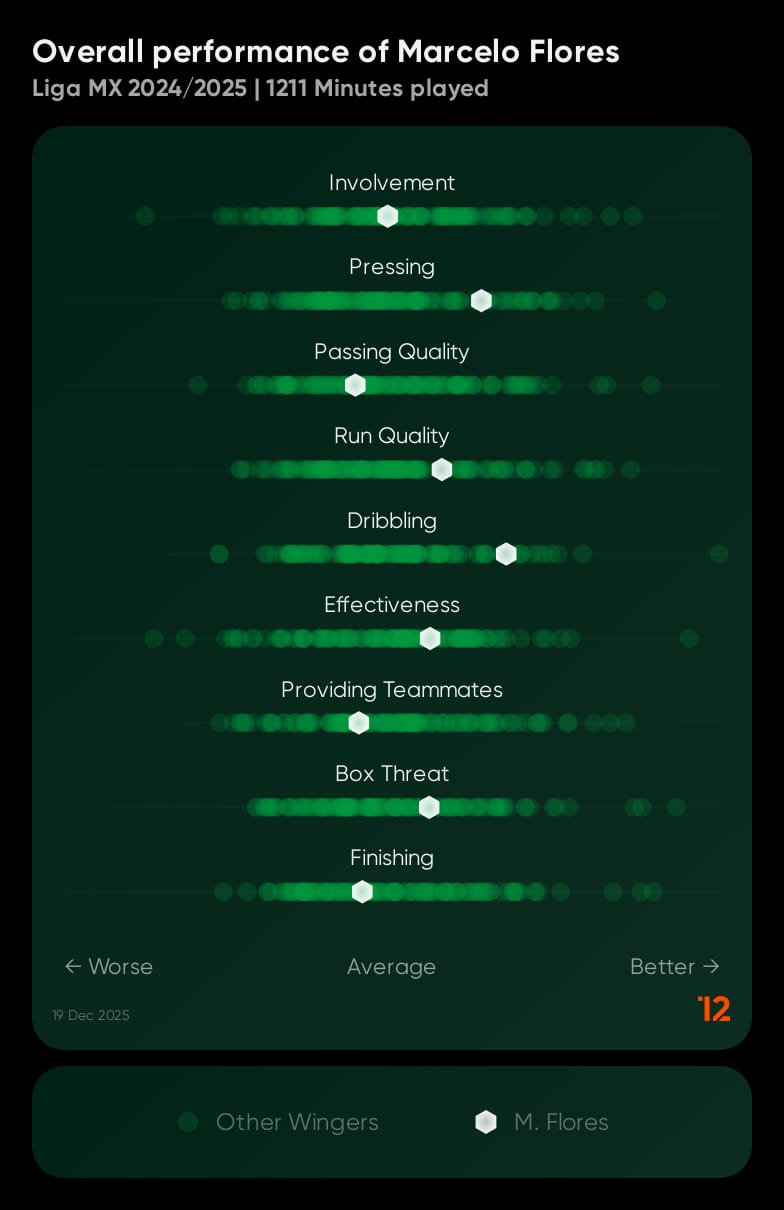
Marcelo Flores only started two games for Tigres this season. With seven months to go until the World Cup, Flores seems to still have a chance of being part of the Canada squad, but needs game time. A loan within Liga MX is his most obvious option, and Necaxa could explore the possibility of a temporary move (ideally, with a purchase option). Intense out of possession and a dangerous dribbler, Flores has to develop his end product, but is only 22-years-old. Necaxa would likely be a wiser choice than Pumas, given that Jorge Ruvalcaba would block his path to regular minutes on the left-wing.
Strikers | Badaloni can replace Cambindo
In his cautious style, Varini hasn’t got the most out of his strikers.
Like Necaxa’s number nines, Varini’s strikers often have to contest aerial duels. Whilst Juárez were more patient in-possession, he maintains the option to go direct towards a striker when required. The number of crosses attempted also increases the amount of aerial duels contested.
The difference comes from the quantity, and quality, of shooting opportunities for his strikers. Varini will inherit better forwards than Zaldívar and Estupiñán, but his defensive style can also limit chances for his number nines. This may become an issue if Los Rayos want to maximize the value of their attackers in the future.
Analysis of Twelve metrics
Player | Aerial duels won p90 (percentile rank) | xG p90 (percentile rank) |
|---|---|---|
Diber Cambindo | 0.77 | 0.94 |
Tomás Badaloni | 0.91 | 0.83 |
Óscar Estupiñan | 0.73 | 0.31 |
Ángel Zaldívar | 0.60 | 0.34 |
Diber Cambindo is leaving Necaxa, and Tomás Badaloni is ready to step-into a starting role.
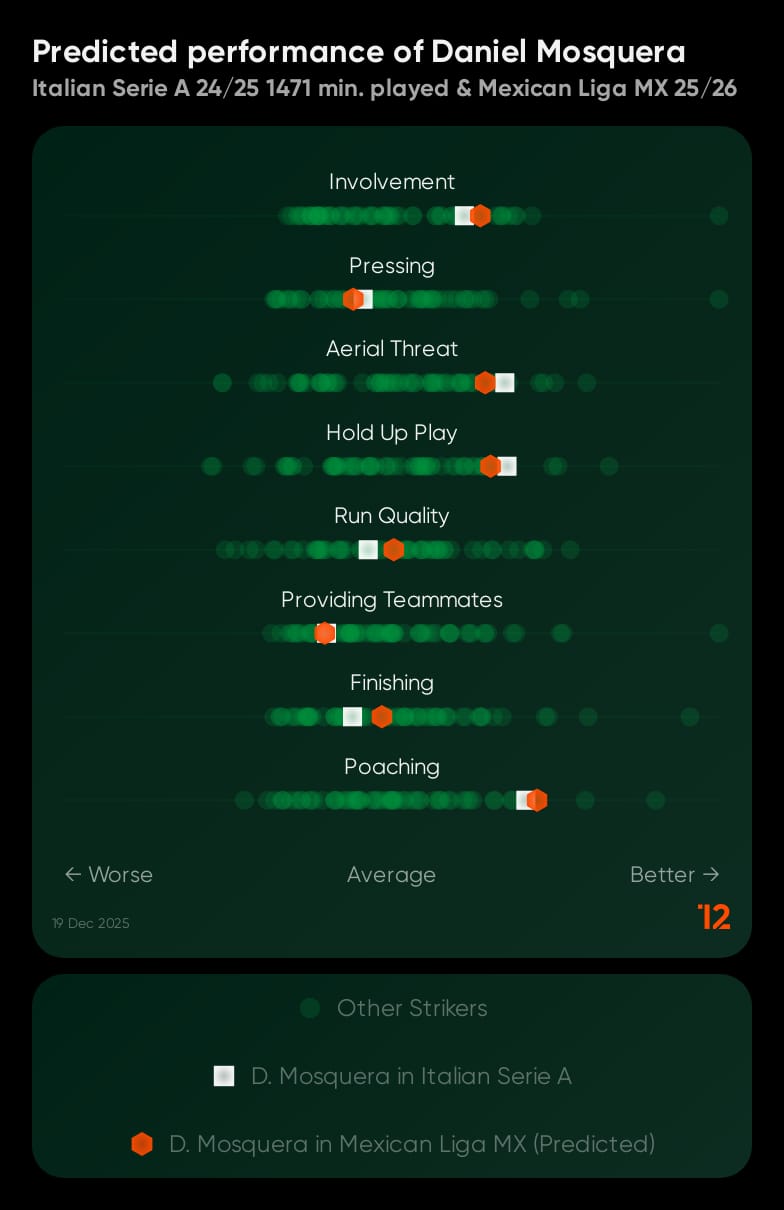
However, it appears that Los Rayos are investing in a new Colombian forward. Daniel Mosquera, who’s played little in Italy this season, could arrive in Aguascalientes, and his performances in 2024-25 look promising for Necaxa. Mosquera will have to adapt, given that he’s played most of his career as part of a front-two, but he’s shown the ability to contribute with shots from high quality locations, as well as a strong aerial game.
Thank you for reading, if you’d like to contact me regarding any questions, comments or to consult my services, you can contact me on:
Linkedin - https://www.linkedin.com/in/thomas-harrison-a682a2175/
Twitter/X - https://x.com/tomh_36
También, se puede leer este artículo en Español- https://cambiodejuego.beehiiv.com/